
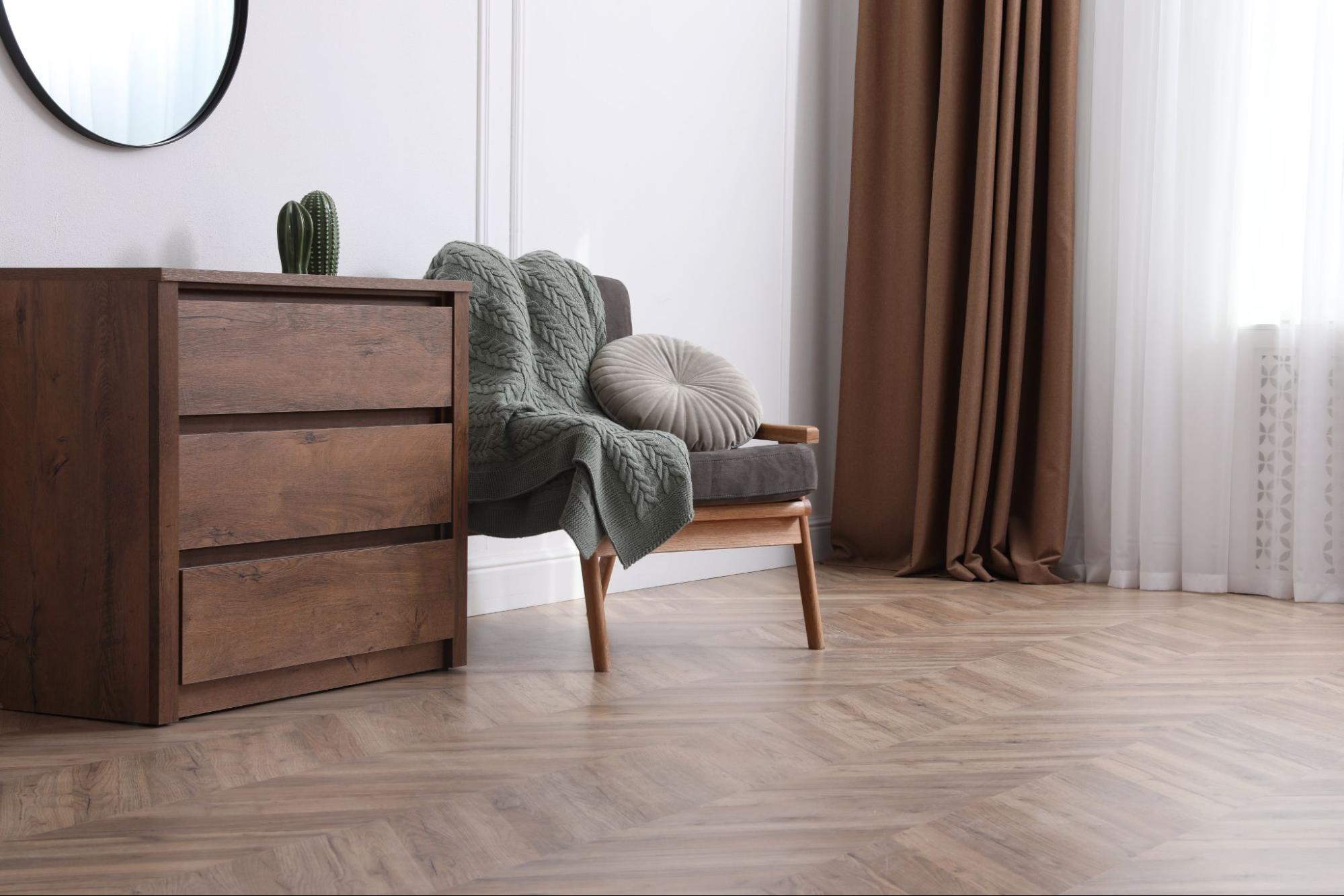
An overview on the most common timber flooring types on the Australian market (by construction).
You’ve decided to build or renovate. You’ve decided that you love and want the look of “wood floors.”
Only now to find out that so many types of timber flooring exist. Like solid, softwood, hardwood, engineered, hybrid, laminate, vinyl, parquetry, bamboo, and more terms you’ve never heard before.
It’s enough to do your head in.
We get it. It’s what we hear a lot from everyday Aussies after new timber floors.
At Advance Floors, we’re the experts in supplying, installing and finishing timber flooring.
Though before we can begin our work making beautiful timber floors…YOU need to know what you want, and what you’re looking for.
Don’t know already? No worries, this guide on types of timber floors is the best place to start.
We go through the defining characteristics, visual and physical benefits, limitations, and price positions on timber floor types, so you can make the best informed decision for your flooring.
Solid Timber Flooring (Natural Timber Flooring)
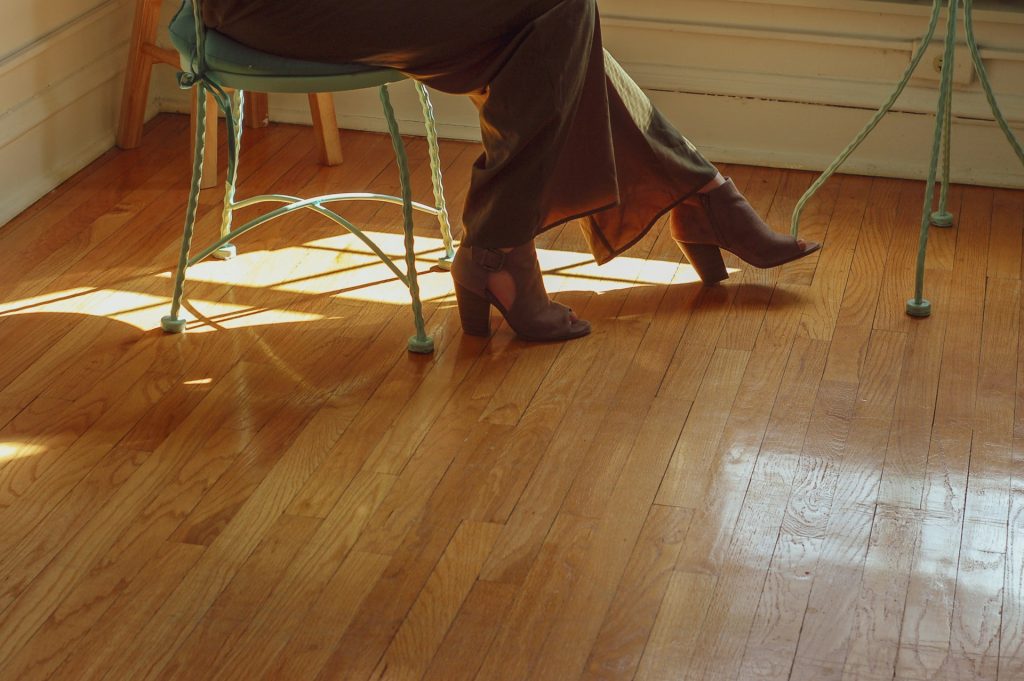
Solid Timber Flooring is exactly what the name suggests: planks cut from a single piece of timber, with no layers or composite materials. The beauty and prestige of this flooring comes from the natural raw materials of the wood itself.
Solid timber is the traditional, time-honoured choice in flooring that has graced many homes and heritage buildings for centuries.
What Makes Solid Natural Timber So Special
The beauty of solid timber is that it can be sanded and refinished multiple times over its lifetime—we’re talking 5-10+ times depending on the thickness—which means your floor can last generations with proper care.
Each plank is milled from a single log, meaning you get the full depth of natural timber throughout. Solid timber boards are typically 19-21mm thick, though you can find them ranging from 12mm to 25mm.
The Key Features of Solid Timber Floors
The grain pattern, colour variations, and natural characteristics of the wood, such as gum veins and knots, are present throughout the entire thickness of the board in natural timber. Not just on the top surface of the plank.
This gives solid timber an authenticity or ‘rawness’ that’s hard to replicate. For those that love the beauty in the details, as well as a more warm and natural touch in their homes…you would probably most love a solid timber floor.
As the timber ages, it also develops a rich patina that many homeowners cherish. It also means every aged solid timber floor is different, and tells its own story.
What to Consider Before Installing Any Type of Solid Timber Floor
The natural movement of timber—expanding in humid conditions and contracting when dry—is something you need to accommodate, but it’s also part of the living, breathing nature of real wood.
It generally requires acclimatisation in your home for 7-14 days before installation to adjust to local humidity levels. Once it’s ready to install, solid timber must be secret-nailed or glued to a suitable subfloor.
(Natural timber can warp or swell from moisture, so it’s not suitable for installation over concrete in high-moisture areas or below-ground spaces without proper moisture barriers and preparation.)
When to Choose Solid Timber
Want the most authentic, long-lasting option and have a suitable subfloor? Select solid timber flooring.
It’s ideal for heritage renovations, prestige homes, and situations where you want the option to dramatically change the floor’s appearance in the future through sanding and refinishing.
It’s also the perfect option for those that love both natural and old money aesthetics, with beauty and character that grows over time.
Softwood Timber Flooring
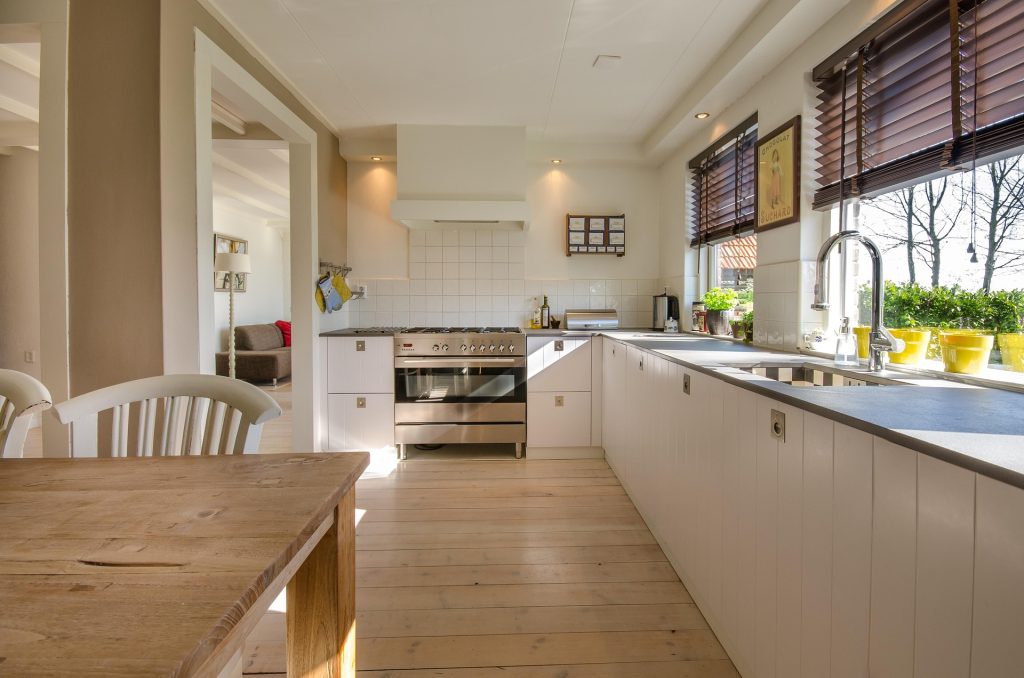
Within the solid timber category, softwood represents an economical and attractive option that’s often overlooked in favour of hardwoods.
Don’t let the name fool you—“softwood” doesn’t mean the timber is necessarily soft or inferior. The term actually refers to the botanical classification of the tree (typically conifers like pine and cypress).
While generally softer than Australian hardwoods, quality softwoods can still make excellent flooring when properly selected and finished. They’re also more comfortable underfoot too!
Common Species of Softwood in Australia
Popular Australian softwood flooring options include Hoop Pine (Araucaria cunninghamii), Cypress Pine (Callitris species), and Celery Top Pine (Phyllocladus aspleniifolius). These native timbers typically feature lighter colours ranging from pale cream to golden honey tones, with visible knots and grain patterns that give them a rustic, country aesthetic. While Radiata Pine (an introduced species) is also commonly used, native Australian softwoods offer unique characteristics and support local forestry.
Practical Considerations
Softwood flooring is more susceptible to denting and scratching than hardwood, making it better suited to bedrooms and low-traffic areas rather than busy kitchens or hallways. However, modern finishing techniques and hard-wearing polyurethane coatings have significantly improved their durability. The softer nature actually makes them more comfortable underfoot and quieter than hard species.
Cost and Value
Softwood flooring typically costs 30-50% less than hardwood alternatives, making it an excellent choice for budget-conscious projects or holiday homes.
Hardwood Timber Flooring
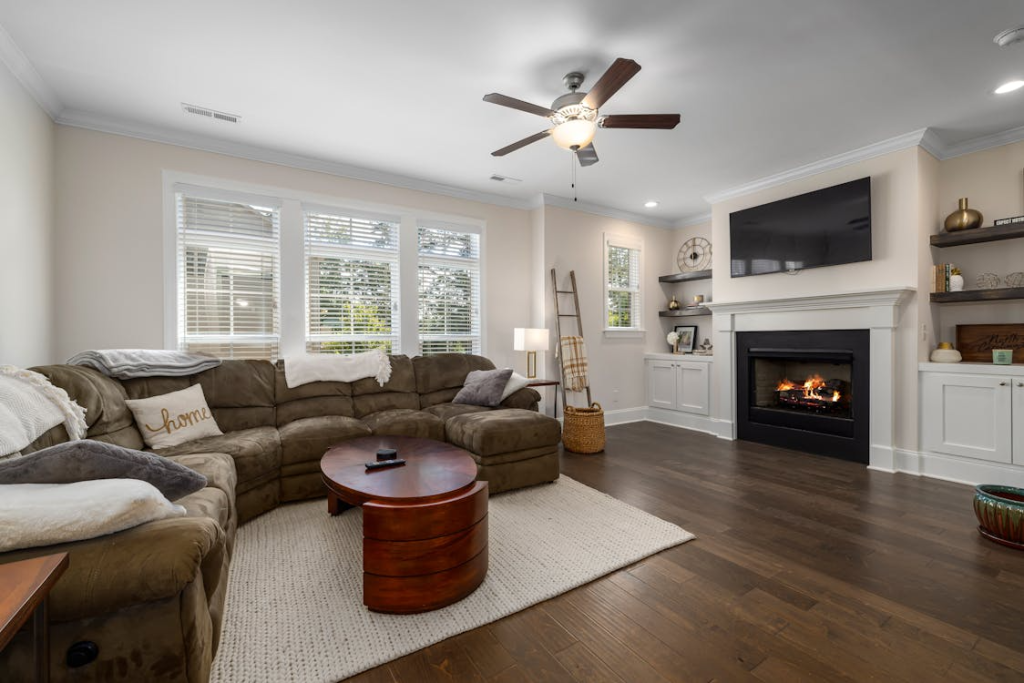
Hardwood flooring is the premium choice in solid timber, prized for its exceptional durability, stunning aesthetics, and remarkable longevity.
Hardwood comes from deciduous trees (flowering plants) and includes most Australian native species. Tree species where hardwood comes from take longer to grow compared to softwood species, but they produce stronger and more premium timber as a result. These timbers are significantly denser than softwoods, measured by the Janka hardness rating. Australian hardwoods are among the hardest in the world, with many species exceeding 10+ on the Janka scale.
Performance Characteristics
Hardwood’s density makes it highly resistant to wear, denting, and scratching. It’s the go-to choice for high-traffic commercial applications and busy family homes. The tight grain structure also makes it more dimensionally stable than softwood, though it still requires proper acclimatisation and installation.
Aesthetic Range
Australian hardwoods offer an incredible spectrum of colours, from the pale blondes of Tasmanian Oak and Blackbutt to the deep reds of Jarrah and the rich browns of Spotted Gum. Other popular natives include Victorian Ash, Tallowwood, Grey Ironbark, and various Ironbark species. The grain patterns range from subtle and uniform to dramatic and featured, giving you enormous design flexibility.
Hardwood Timber’s Price Point
Quality hardwood flooring is a significant investment. Out of all your potential timber flooring options, it holds the highest price point. However it is also an option that can add substantial value to your property.
A well-maintained hardwood floor can last 50-100+ years, making it one of the most cost-effective flooring choices when viewed over its lifetime.
Engineered Timber Flooring
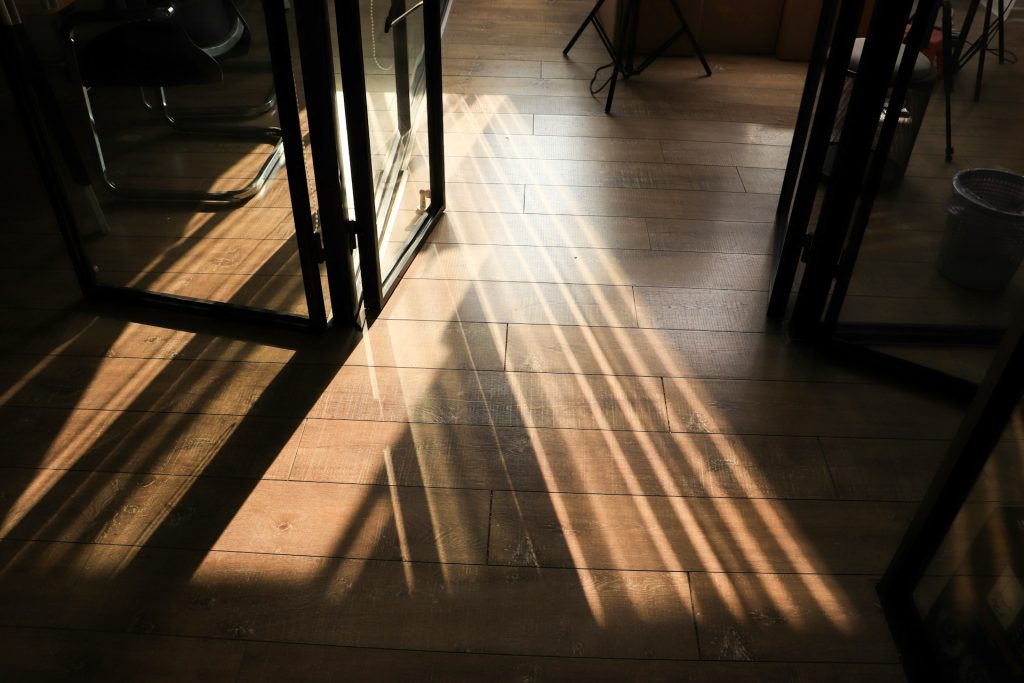
Many love the beauty and warmth of natural solid timber. However pricing often kicks it out as a contender for their flooring choice, for just as many. That’s why you’ll love to hear about engineered timber.
Engineered Timber Flooring mirrors the appearance of solid timber flooring because its surface layer is made from genuine hardwood veneer. This real wood top shows the same natural grain patterns and textures, making it nearly impossible to distinguish from traditional solid timber once installed.
How Engineered Timber Flooring is Made
Engineered timber consists of multiple layers bonded together.
The top layer (the “wear layer”) is genuine timber, typically 2-6mm thick, while the core layers are usually made from plywood, high-density fibreboard, or cross-laminated timber.
This cross-grain construction significantly reduces the board’s tendency to expand and contract with humidity changes.
Engineered Timber’s Key Advantages
The engineered construction makes these floors much more dimensionally stable than solid timber (which often warps, swells, or cracks from weather changes), allowing installation in locations where solid timber would be problematic—over concrete slabs, in apartments, in bathrooms (with proper waterproofing), and even over underfloor heating systems.
The boards are typically pre-finished in the factory, which means faster installation and more consistent finishing.
Understanding Wear Layers of Engineered Flooring
The thickness of the top wear layer is crucial.
A 6mm wear layer can be sanded and refinished 2-3 times, while a 2-3mm layer might only handle one refinish or none at all.
Always ask about wear layer thickness when comparing products. It’s really the difference between a 20-year floor and a 50-year floor.
Great Installation Flexibility
Engineered timber can be glued down, floated (click-lock systems), or even secretly nailed, depending on the product.
The floating installation is particularly attractive for renovations and DIY projects, as it’s faster and doesn’t require the same level of skill as traditional nailing.
Engineered Flooring Price
Engineered timber typically sits between laminate and solid timber in price point.
The exact price varies significantly based on wear layer thickness, species, and finish quality.
Timber Laminate Flooring
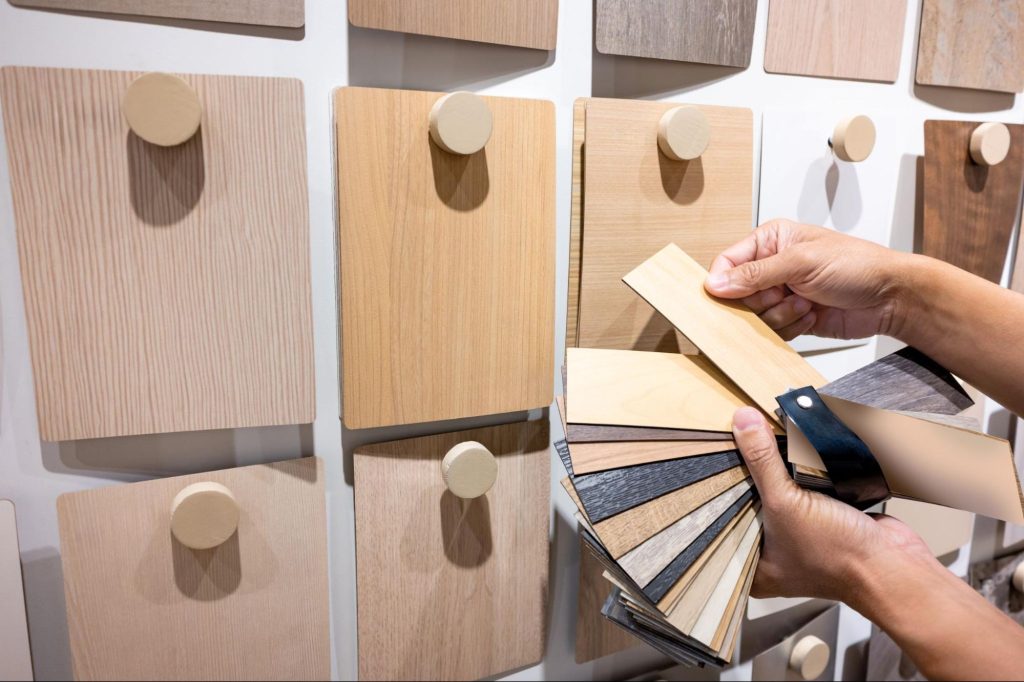
Laminate flooring is often confused with engineered timber, but it’s quite different in construction and performance.
Laminate Flooring contains no actual timber on the surface. Instead, it consists of a high-resolution photographic image of timber printed on paper, which is then protected by a clear, highly durable melamine wear layer. This sits on top of a high-density fibreboard (HDF) core, with a backing layer for stability.
Does Timber Laminate Look Like Real Wood?
Modern laminate technology has come a long way, and premium products can look surprisingly convincing at first glance. However, they lack the authentic texture, depth, and warmth of real timber. The pattern repeats across boards, which becomes noticeable in larger installations.
Where Laminate Excels
Laminate’s superpower is durability and practicality. The melamine wear layer is incredibly hard and scratch-resistant—often more so than actual timber. It’s also water-resistant (though not waterproof), easy to clean, and very forgiving of subfloor imperfections. For rental properties, commercial spaces, or homes with large dogs and active children, laminate offers practical advantages.
Timber Laminate Installation and Cost
Most laminate uses a click-lock floating installation system that’s genuinely DIY-friendly.
You can install a room in a day without special tools.
Limitations for Timber Laminate Floors
There are some limitations here with laminate. You cannot sand or refinish laminate—once the wear layer is damaged, the floor needs replacing.
It also sounds hollow underfoot compared to solid timber, and if water penetrates the joints, the HDF core can swell irreversibly.
Bamboo Flooring
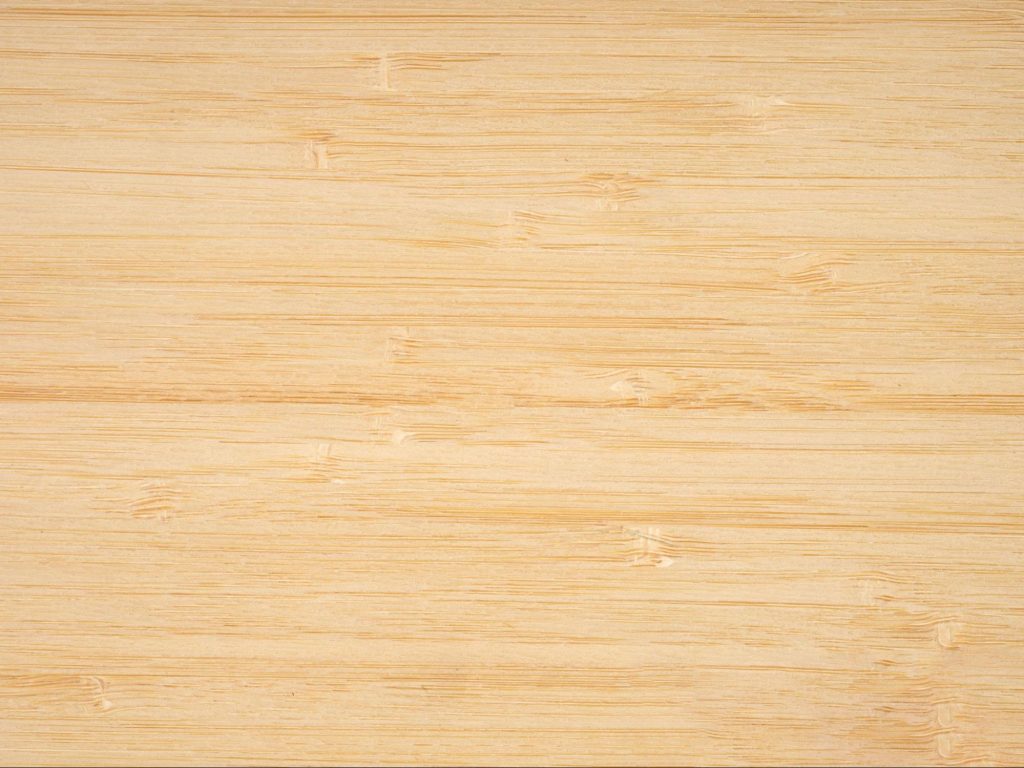
Bamboo Flooring has gained popularity as an eco-friendly alternative to traditional timber, though it’s technically a grass rather than wood.
Bamboo grows incredibly fast—reaching maturity in 3-5 years compared to 20-100+ years for timber. It regenerates from the root system after harvesting, making it a highly renewable resource. For environmentally conscious homeowners, this rapid renewability is a major drawcard.
Bamboo Flooring Types by Construction
Bamboo flooring comes in three main constructions.
- Horizontal bamboo shows the natural nodes and grain of the bamboo stalks laid flat.
- Vertical bamboo positions the strips on edge for a more linear look.
- Strand-woven bamboo shreds the bamboo fibres and compresses them under extreme pressure, creating an incredibly dense material that rivals the hardest Australian timbers on the Janka scale.
Bamboo’s Performance in Flooring
Strand-woven bamboo is remarkably hard and durable—often rating 13+ on the Janka scale. It’s highly resistant to denting and wear, making it excellent for commercial and high-traffic applications. Horizontal and vertical bamboo are softer but still comparable to mid-range hardwoods.
How to Play With the Aesthetic of Bamboo Flooring
Bamboo has a distinctive appearance that’s different from traditional timber. The natural blonde colour can be stained or carbonised (heat-treated) to create darker tones, though carbonising reduces hardness by about 30%. The look is contemporary and clean-lined. It works well in modern and Asian-inspired interiors.
Other Things to Know When Buying Bamboo Floor
Quality varies enormously in bamboo products, particularly with imports. Look for products certified by FloorScore or similar programs to ensure low formaldehyde emissions.
Bamboo is also sensitive to humidity changes, so proper acclimatisation before you install is essential.
Hybrid Flooring
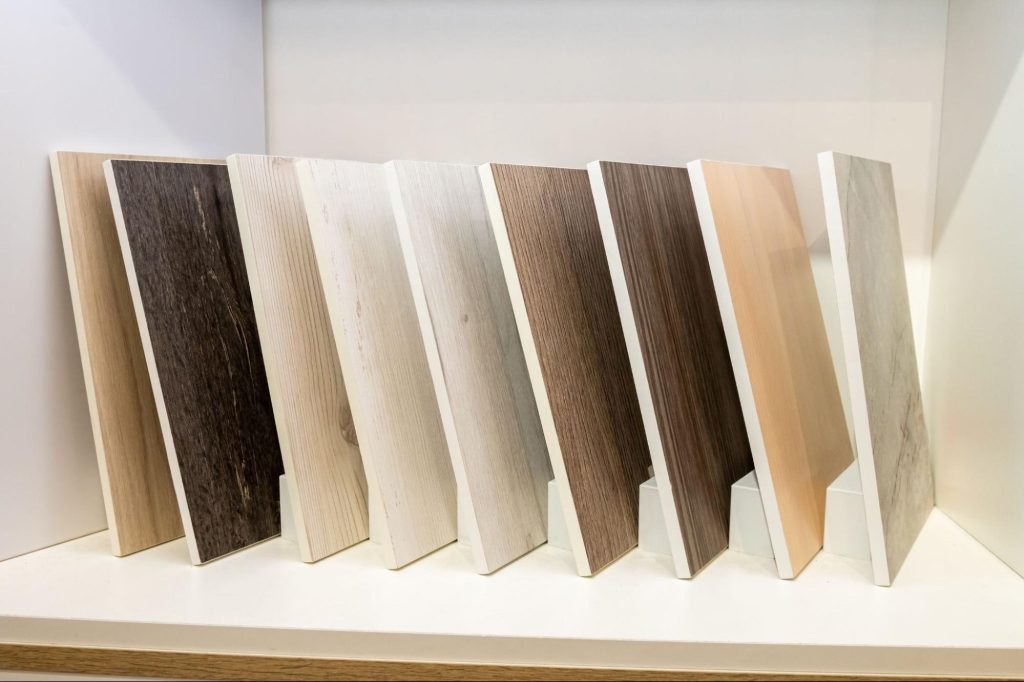
Hybrid Flooring is the new kid on the block. Combining elements from multiple flooring types to create a highly practical, modern solution.
Here is how it is typically composed: a rigid composite core (stone plastic composite or wood plastic composite), topped with a high-resolution printed design layer and a clear wear layer. The rigid core provides hybrid flooring exceptional stability and durability.
Some premium products will also include a thin layer of real timber veneer, giving you a real timber look.
Waterproofed for a Timber Flooring Option for the Bathroom
This is where hybrid flooring really shines. The rigid core is completely waterproof, making hybrid flooring suitable for bathrooms, laundries, basements, and even outdoor alfresco areas under cover. If a pipe bursts or a washing machine leaks, you can mop up and carry on—the floor won’t warp or swell.
Bamboo’s Major Benefits for Installation
The rigid core means hybrid flooring can be installed over highly uneven subfloors without telegraphing imperfections. It can go directly over tiles, vinyl, and other existing hard floors. The click-lock system is extremely DIY-friendly, and most products can be installed wall-to-wall without expansion gaps (check specific product requirements).
Bamboo Flooring’s Sound and Feel
The rigid core provides a solid, quiet feel underfoot that’s superior to laminate.
Bamboo flooring with attached acoustic underlays will also further reduce sound transmission.
So if you’re thinking you love bamboo in a multi-storey home or apartment, a hybrid bamboo flooring may work best.
Last Things You Should Know Before Buying Bamboo
While hybrid looks like timber, it’s not refinishable—what you install is what you live with. The environmental credentials may also be debatable due to its plastic content.
Where you get your bamboo hybrid flooring is also important. Quality varies significantly, with cheap imports often having poor print quality and weak locking systems. At Advance Floors, you can be assured that you won’t face this problem.
Expect to pay a bit more per square metre for quality product.
Parquetry Flooring
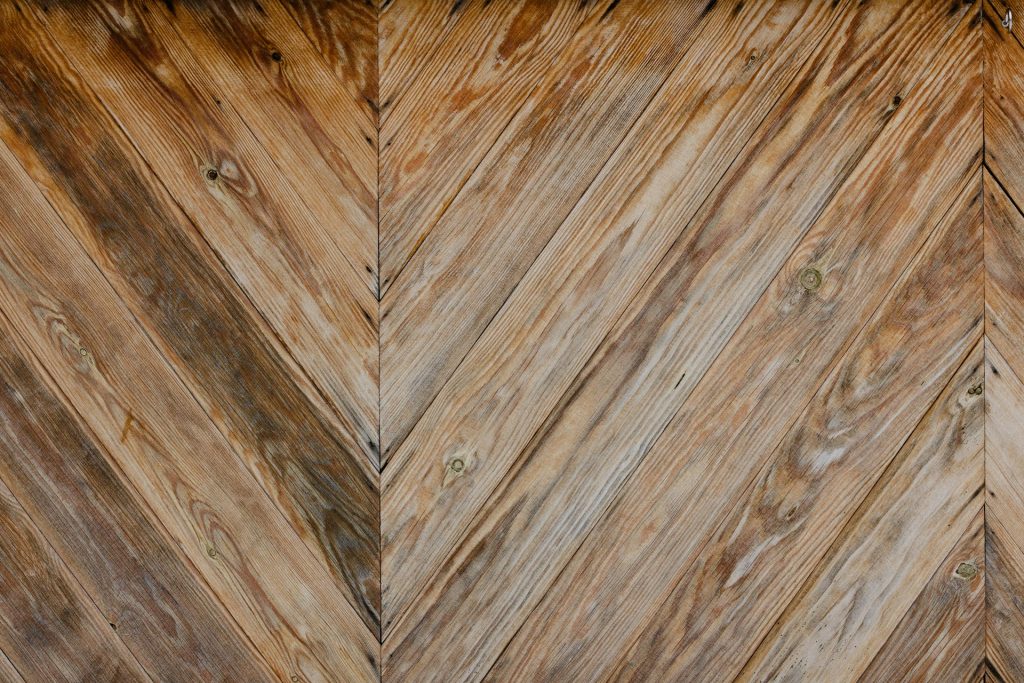
Parquetry is the art form of timber flooring, where small pieces of timber are arranged in geometric patterns to create stunning visual effects.
Classic parquetry patterns include herringbone (angled zig-zag), chevron (pointed zig-zag), basket weave, and Versailles panels (elaborate square patterns). Each requires skilled installation and precise cutting. Historically, parquetry was a status symbol in grand homes and palaces, and it retains that prestige appeal today.
Modern Applications of Parquetry Flooring
Contemporary parquetry has evolved beyond traditional oak in formal settings. Designers are creating bold patterns with contrasting species, mixing widths and lengths, and applying herringbone to modern coastal homes as readily as heritage terrace renovations.
Parquetry creates amazing visual interest that can make smaller spaces feel larger and more luxurious. It is becoming an increasingly beloved accent for lobbies, hallways, walk in closets, and entertainment kitchens.
Parquetry’s Complexity Requires More Labour for Installation
Parquetry requires significantly more labour than standard plank flooring. Each piece must be precisely positioned, and the pattern must be carefully planned to ensure it centres properly in your space. Wastage is typically higher due to cutting and pattern matching. Expect installation to take 2-3 times longer than regular planks.
How Much Does Parquetry Flooring Cost?
Parquetry Flooring can often be a pricier option in timber flooring, depending on pattern complexity and timber species.
Simple herringbone in a common species is at the lower end, however there are also much more intricate custom patterns in premium species that really reach the higher price range.
However those who do take the plunge often see it as an investment, as it creates a truly unique floor that dramatically enhances the property.
Vinyl Flooring
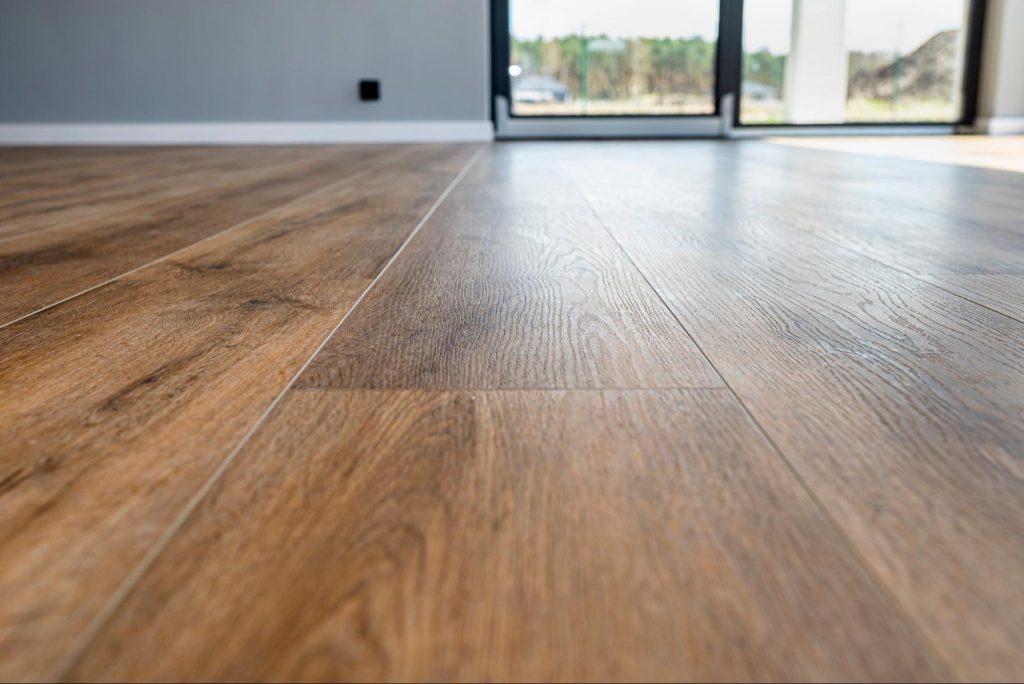
Vinyl Flooring has undergone a remarkable transformation from its humble beginnings, now offering premium options that rival traditional materials in appearance.
Traditional sheet vinyl comes in wide rolls (2-4 metres) that can cover most rooms without seams. Modern products feature realistic embossed textures and high-definition printing that convincingly mimics timber, tile, and stone. It’s waterproof, soft underfoot, and very economical based on its price per square metre installed.
Advantages of Vinyl Flooring
Vinyl’s cushioned construction makes it warm and comfortable underfoot, which helps you reduce fatigue in kitchens and workspaces. It’s also completely waterproof, resistant to most chemicals and stains, and incredibly low maintenance.
Installation is relatively quick as well, and it can go over most existing floors. It’s another reason why vinyl flooring is beloved for easy ‘small fixes’ style home renovations.
Vinyl Has Great Applications in Healthcare and Commercial
Vinyl dominates in healthcare facilities, aged care homes, and commercial settings because it’s hygienic, easy to clean, and can be heat-welded at seams to create a completely impervious surface. These practical advantages translate well to family homes, particularly for those dealing with incontinence issues, disabilities, or intensive care situations.
Vinyl Does Have Limitations
Vinyl can be damaged by sharp objects, heavy furniture can leave permanent indentations, and it can discolour with prolonged sun exposure. It’s also not as environmentally friendly as natural materials, though recycling programs are improving. The “plastic” aesthetic, despite improvements, doesn’t convince everyone.
Vinyl Plank Flooring
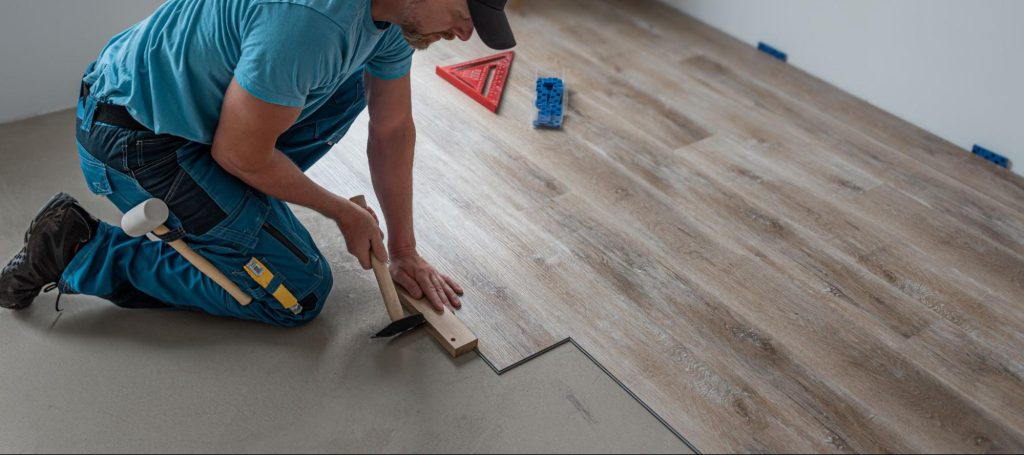
Vinyl Plank Flooring (also called Luxury Vinyl Plank or LVP) takes vinyl technology in a different direction, creating individual planks that closely mimic timber boards.
Vinyl planks consist of multiple layers: a backing layer for stability, a printed design layer, a clear wear layer, and often a protective top coating. Premium products include embossed texture registration, where the texture aligns perfectly with the printed grain pattern for remarkable realism.
Click-Lock Innovation AKA ‘Floating Installations’
Most vinyl planks use sophisticated click-lock systems that allow floating installation without glue. This makes them extremely DIY-friendly and allows for easy replacement of damaged boards. Some systems are so refined that boards can even be lifted and relocated if needed.
How Vinyl Planks Perform as Floors
Like sheet vinyl, planks are waterproof, but the individual plank format looks more authentic. The wear layer (measured in mils—thousandths of an inch) determines durability. Commercial-grade products with 20-30 mil wear layers can withstand extraordinary abuse. They’re also dimensionally stable in all conditions, making them suitable for any location in the home.
Vinyl Planks Has A Lot of Flexibility in Design
Vinyl planks come in an enormous range of colours, textures, and plank sizes. Wide-plank formats create a contemporary look, while narrower planks suit traditional spaces. Some manufacturers offer incredibly realistic replication of specific timber species, complete with authentic knots, grain patterns, and colour variation.
Vinyl Planks’ Budget Friendly Price Point
Vinyl plank flooring is one of the most accessible options for timber flooring.
The middle to upper end for vinyl floor planks particularly delivers excellent value. Think a highly durable, waterproof, good-looking floor that’s easy to maintain and suitable for any room in the house.
Is It Finally Time to Rejuvenate Your Flooring?
Timber flooring, in its many forms, remains one of the most beautiful, durable, and valuable investments you can make in your home.
The beauty of timber—real or realistically replicated—never goes out of style. It adds warmth, character, and value to every space it graces. Take your time, do your research, and choose wisely. Understanding the characteristics and trade-offs of each option ensures you’ll make a choice you’ll love for years to come. If you’re lost for your next step, or torn between two different options? Advance Floors can help.
Whether you’re a homeowner, interior designer, or builder, Advance Floors is dedicated to helping you create beautiful spaces with timber flooring. From measurement and selection to the completed installed new flooring design, we’ll ensure you get it right.
Get in touch with us today to start talking about the type of timber flooring in Sydney you’re interested in achieving, and we’ll help make it happen.